2025-2026
Digital wellness built by students, for students
mobile app
digital health
ai
in progress

Role
Lead product designer
timeline
June 2025 - present
Team
3 Product designers
1 Graphic designer
4 Data engineers
1 Project manager
contributions
Product design
Interaction design
Design systems
Visual design
at a glance
Evergreen is a $16.5M, research-driven wellness initiative at Dartmouth. Informed by insights from behavioral science research and 100+ students, we are creating an AI-powered mobile platform designed to support everyday student wellbeing through personalized reminders and conversational guidance.
As the lead designer on the project through the DALI Lab, I’m designing end-to-end experiences across onboarding, chat interface, Explore, and Insights features. I'm also mentoring two junior designers and collaborating with engineers, content teams, and institutional stakeholders.
Projected impact
V1 of Evergreen is projected to launch for internal testing in Spring 2026. The project has received media coverage from multiple outlets, including Forbes and MassLive. A full launch of Evergreen is anticipated for late 2027.
made in collaboration with




students impacted upon release
problem
Busy college life makes wellness hard to prioritize.
College students, especially in Dartmouth’s fast-paced quarter system, juggle demanding coursework, relationships, and extracurricular commitments, often deprioritizing their health and wellbeing.
2024 Dartmouth Health Survey Report
2024
2014
Stress
40%
31%
Anxiety
31%
20%
Depression
24%
12%
Sleep difficulties
30%
24%
factors affecting academic performance
opportunity
AI is creating new opportunities for personalized support.
Researchers are exploring how AI can complement human wellness resources by providing accessible, personalized support outside of traditional counseling settings.
campus resources
counseling
peers
mobile platforms
wearables
human support resources
AI support (24/7)
continuous student support
what we’re doing
We’re building a wellness tool designed specifically for Dartmouth students.
Evergreen is a wellness app designed for Dartmouth’s culture and pace. Instead of replacing counseling services, it supports students proactively in everyday moments, helping them reflect, build habits, and manage stress early through timely interventions.
context
Advancing student wellness through a multi-year collaboration
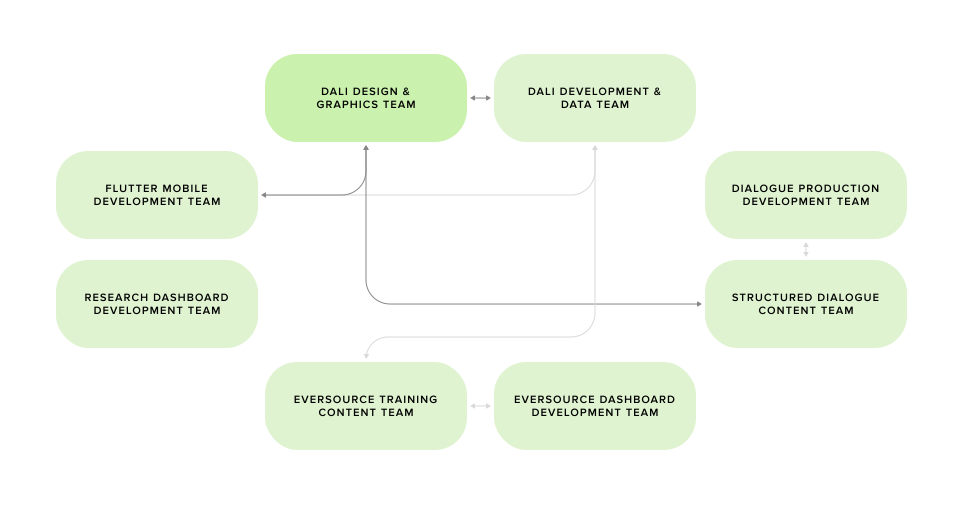
Multiple teams are working across dialogue design, AI model development, mobile engineering, research, and UX to build a campus-specific wellness platform. My team and I are designing the student-facing mobile experience.
solution
Data patterns turned into personalized suggestions
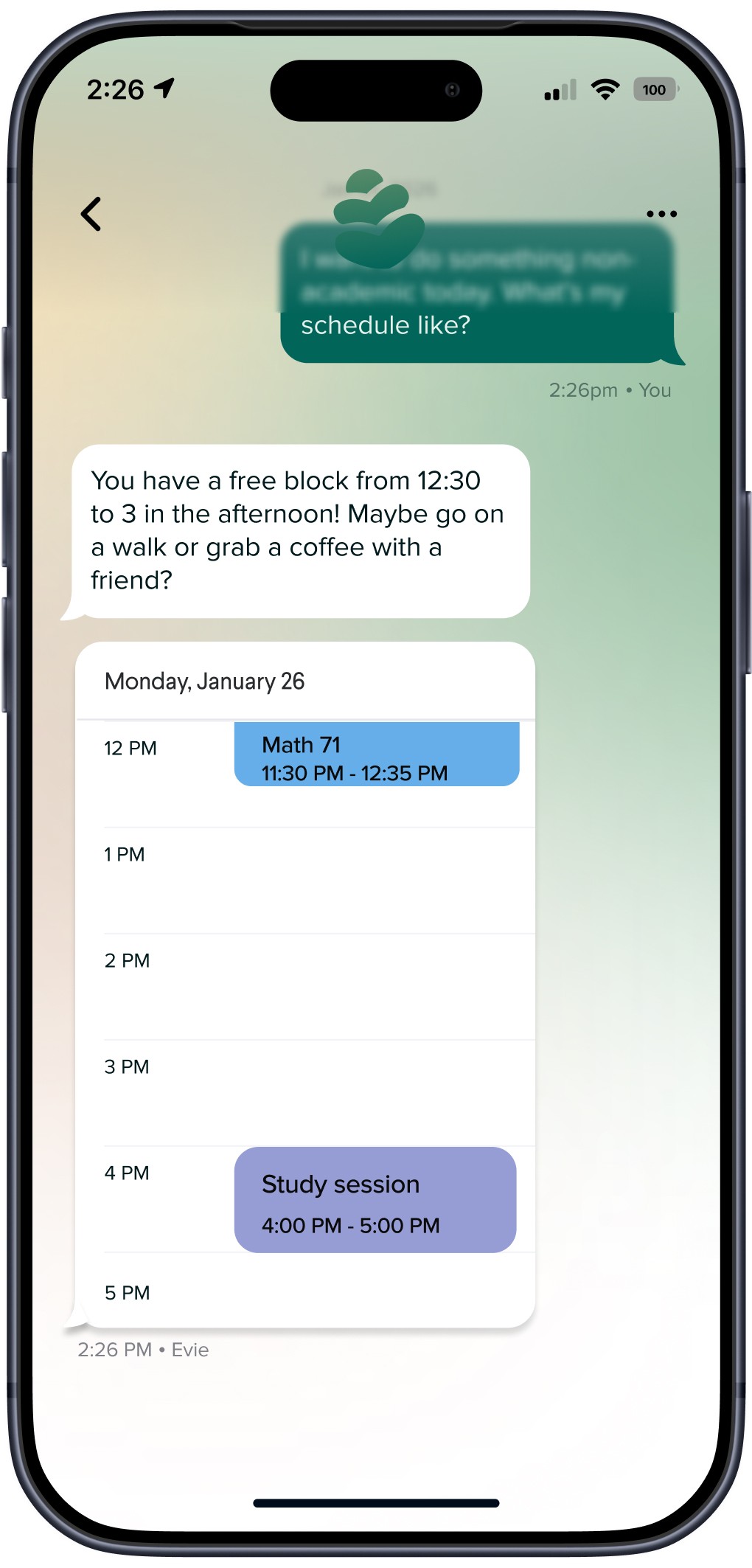
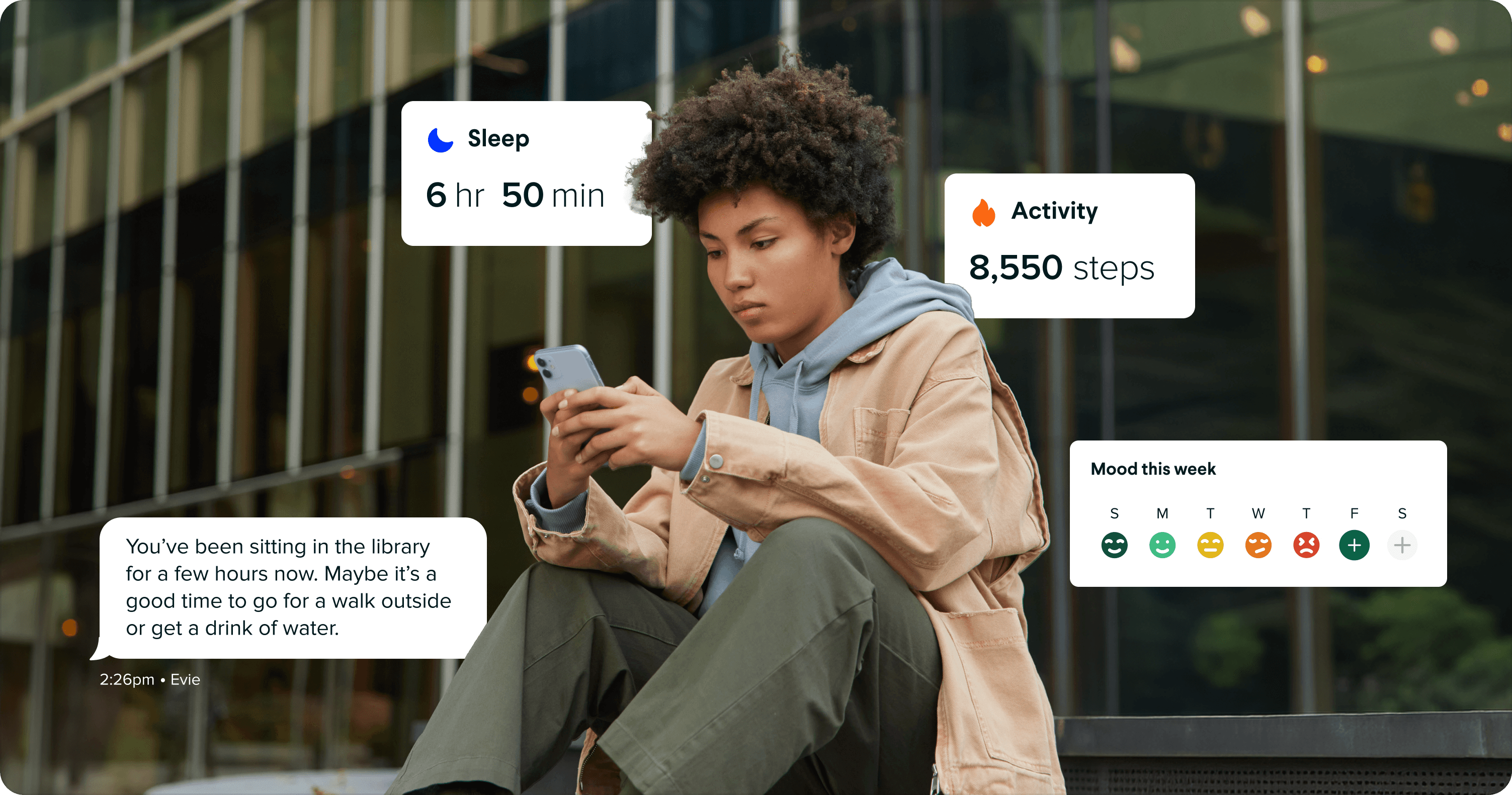
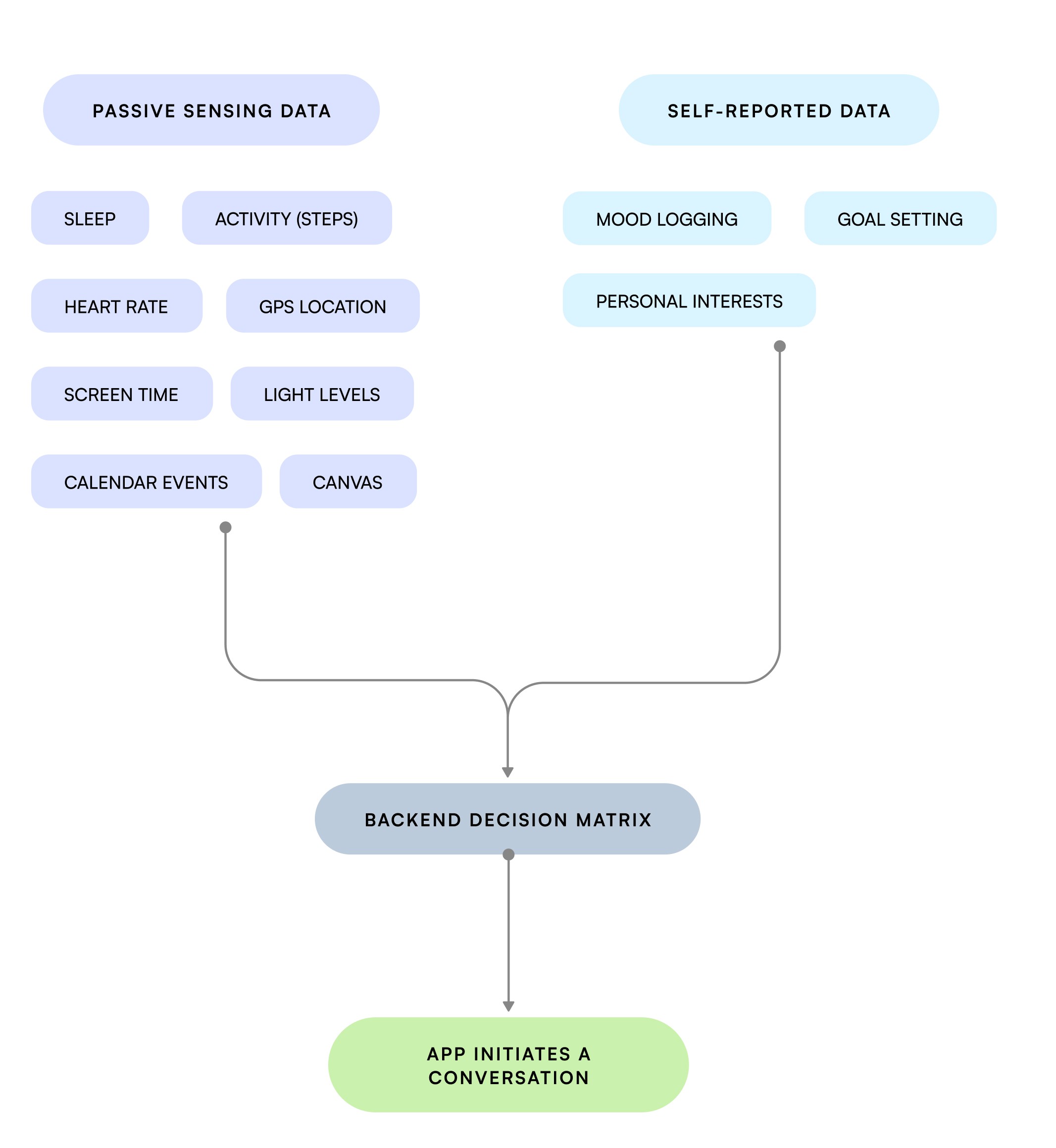
Evergreen integrates passive sensing data from a student’s everyday activities, schedule, and voluntary information like sleep, mood, or steps to provide behavior and schedule-based suggestions.
solution
Guided conversations that match student needs
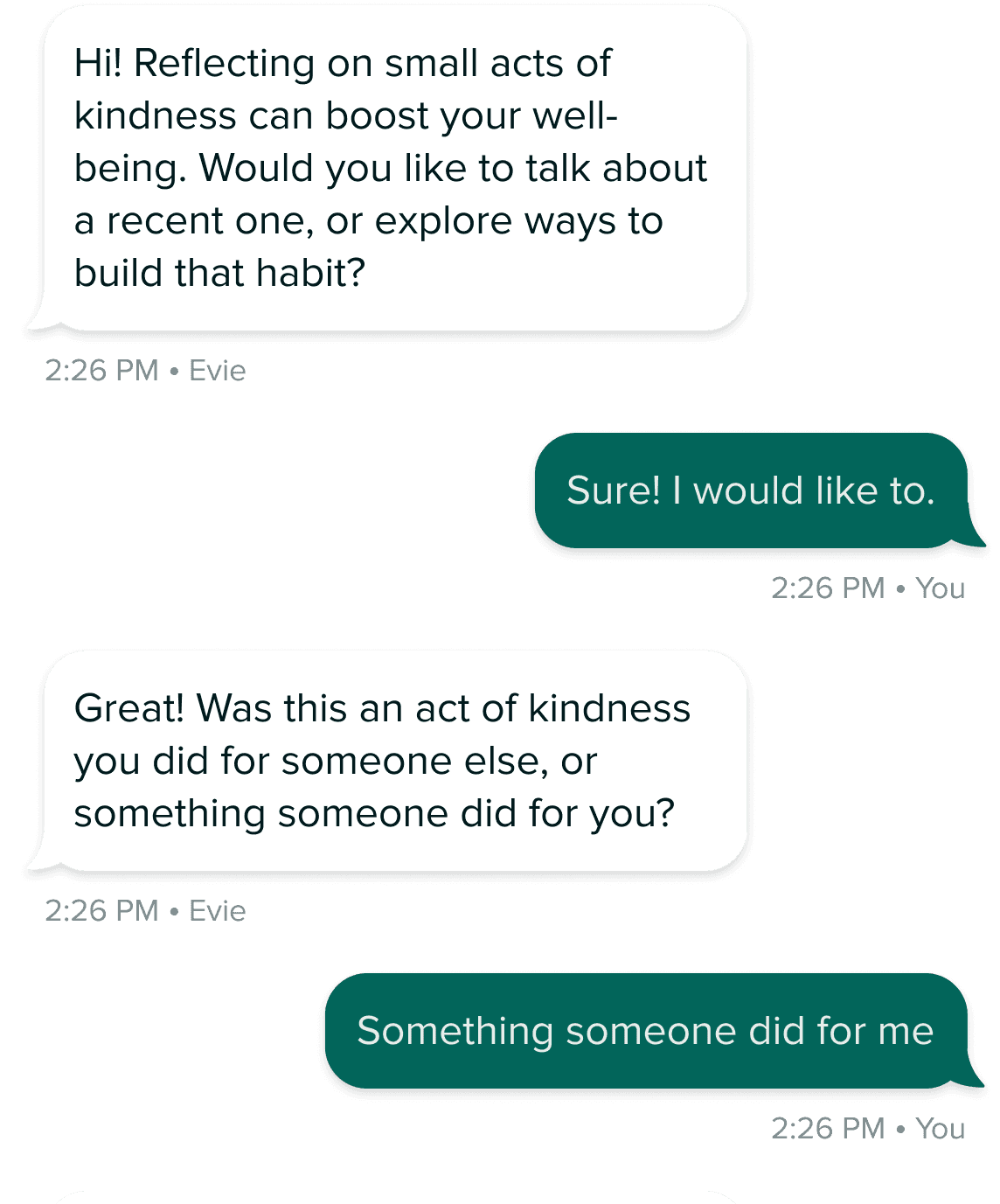
Conversations are designed to feel personal and relevant to campus life, and are written by a team of 100+ Dartmouth undergraduates. Topics range from building healthy habits to making better connections on campus.
solution
Integrated chat tools for everyday support
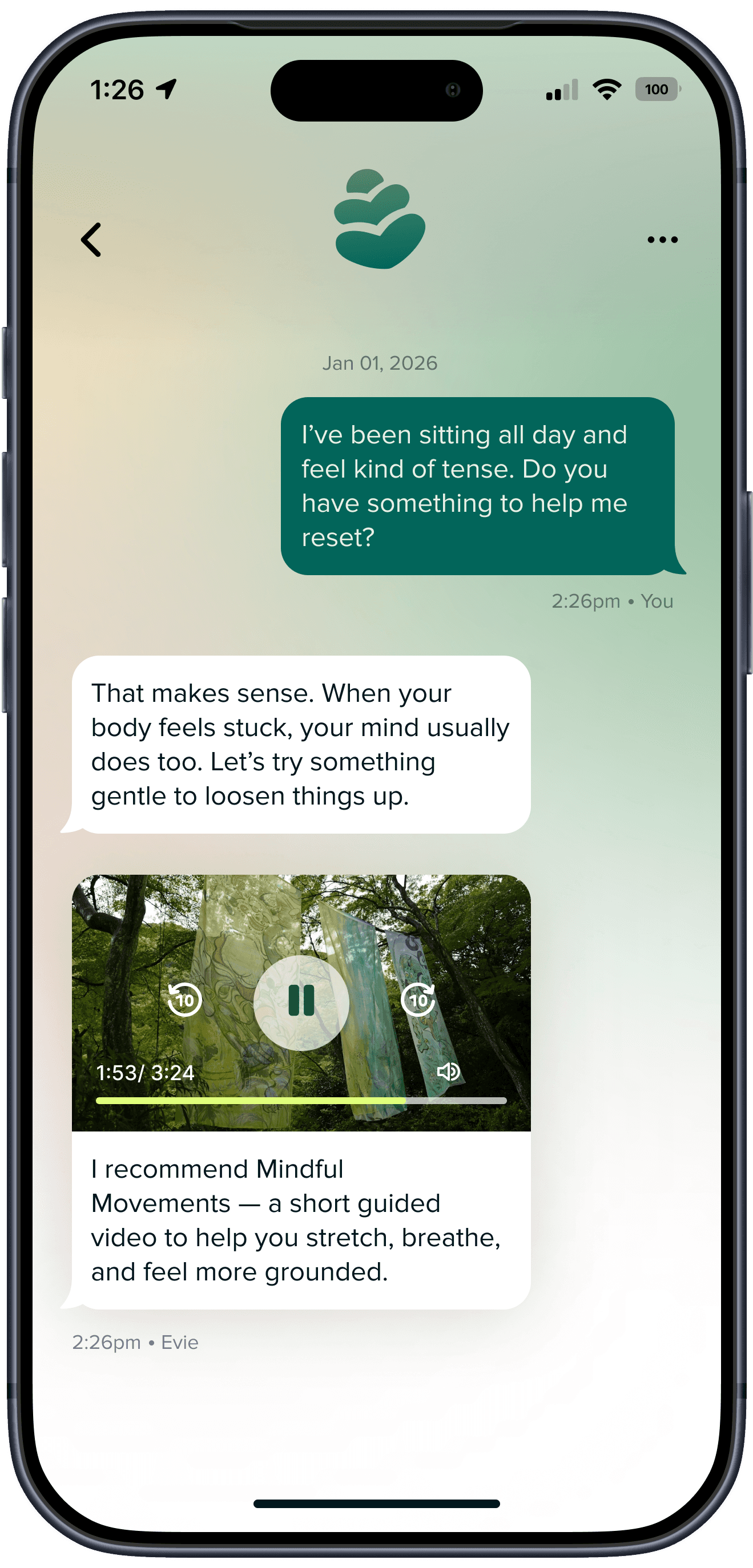
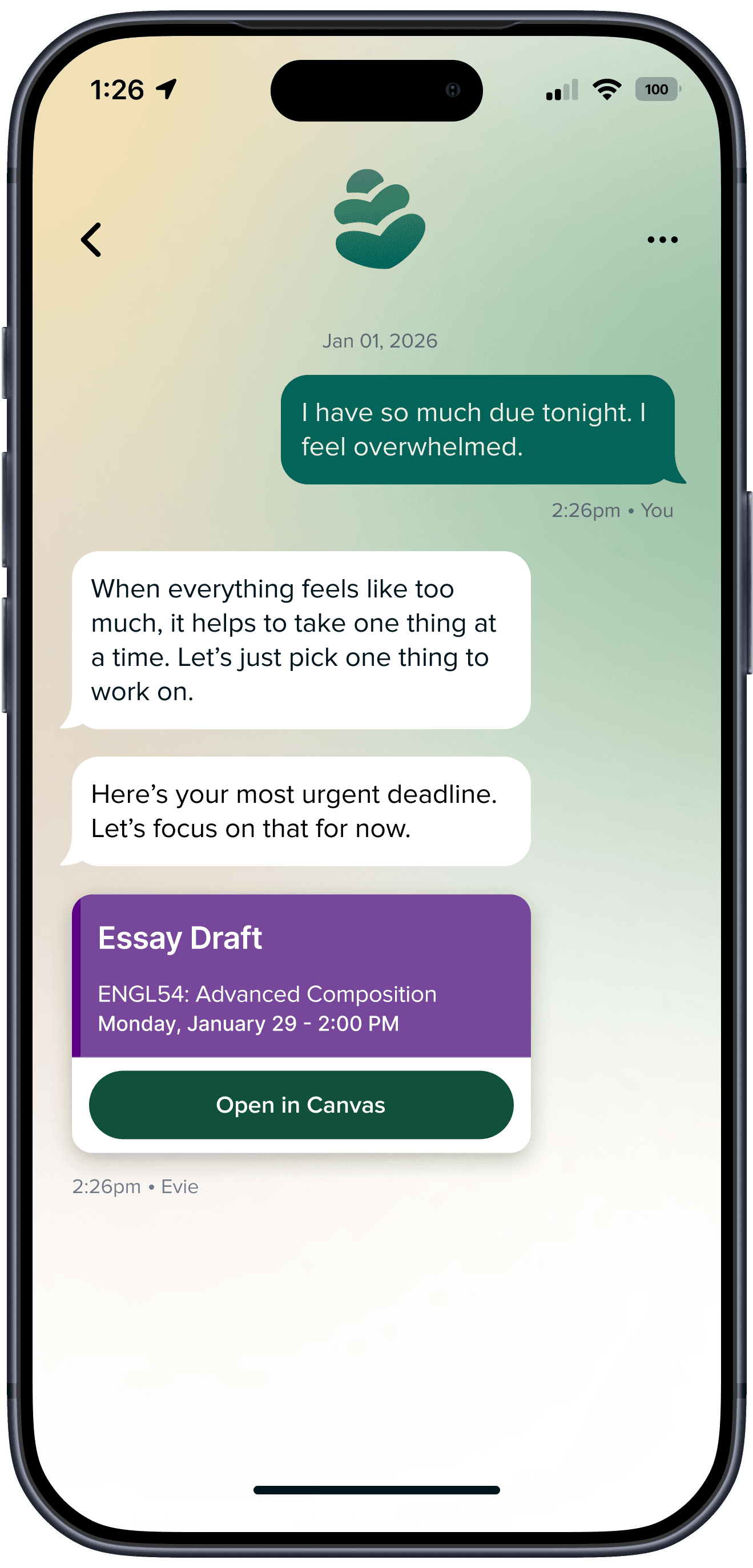
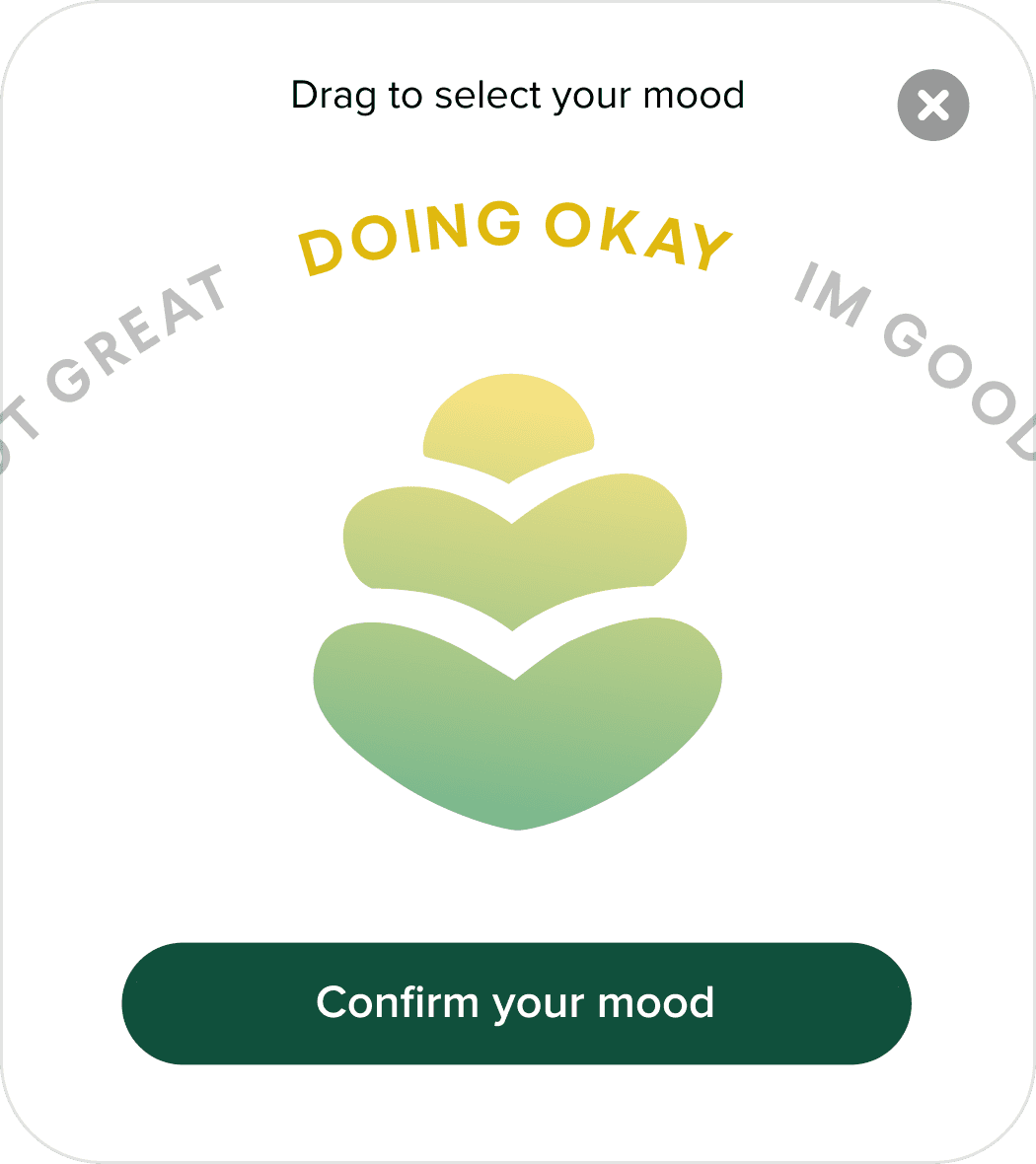
Students can track their wellbeing, explore their environment, and manage their time, all in one place. Each chat module is designed to be flexible, interactive, and integrated into the chat experience.
solution
Reflect on daily habits over time
The app visualizes trends in mood, sleep, and steps, turning raw data into actionable insights to spot patterns and track progress.
The process so far
process
A foundation of research at Dartmouth
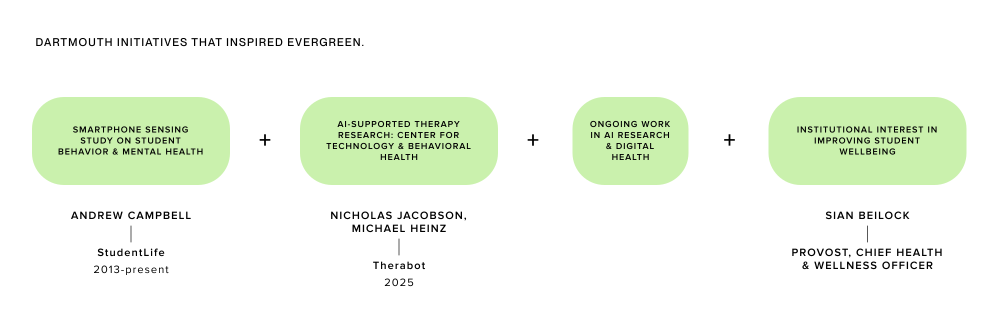
Researchers at Dartmouth have explored how mobile sensing, AI, and behavioral science can support mental health. Studies have shown that smartphones can capture behavioral signals like sleep, activity, and daily routines, to better understand student wellbeing.
research to concept
What if a campus-specific app could proactively support student wellbeing?
Building on the idea of behavioral sensing, we wondered if a campus-specific AI platform could help students reflect on their habits and receive supportive guidance informed by their data.
understanding users
Focus groups explored how AI could support student wellness.
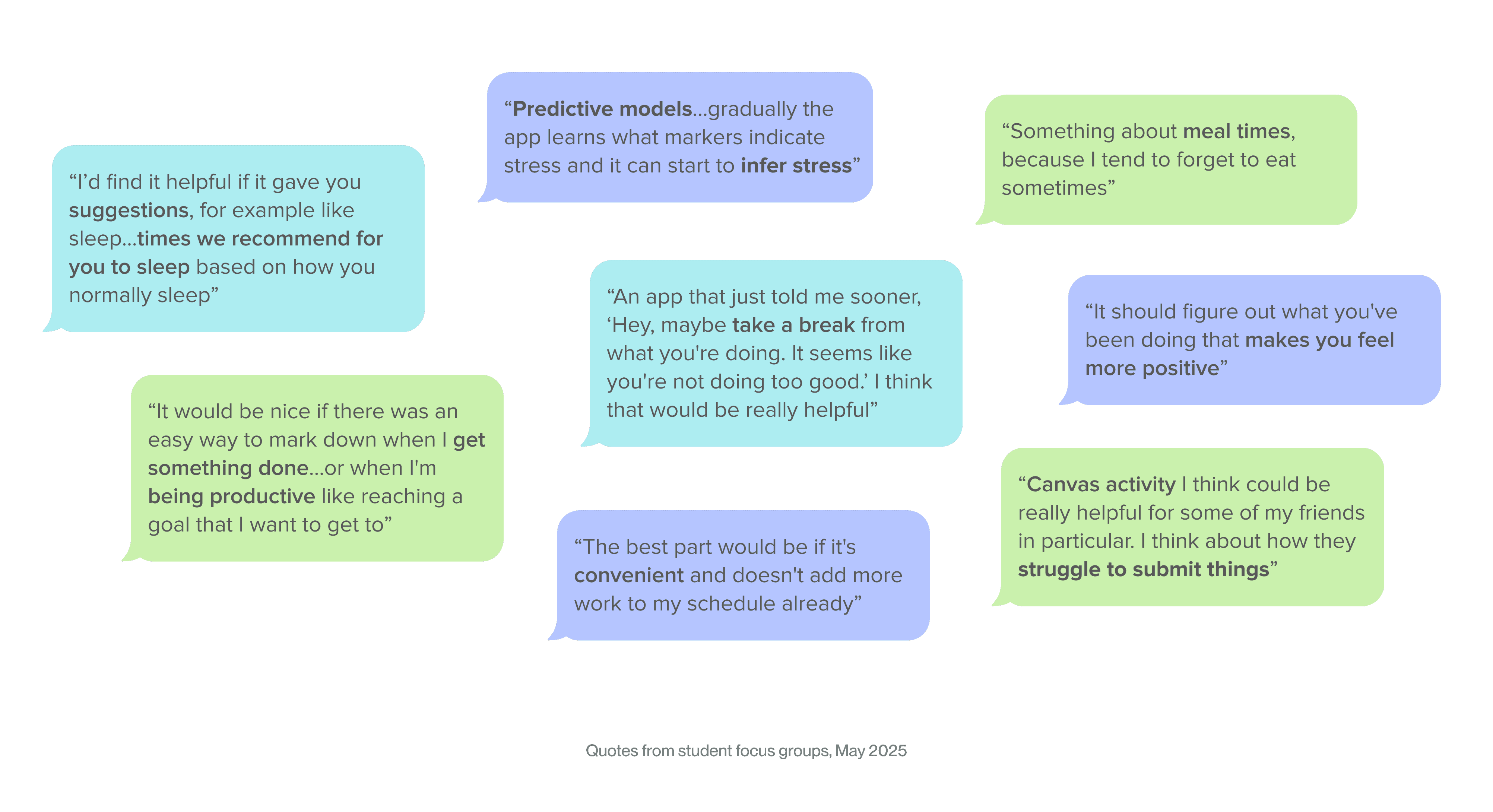
Behavioral researchers conducted focus groups with Dartmouth students to understand attitudes toward AI and wellness support. Due to human-subject research constraints, my team and I didn’t have access to full transcripts, but we received quotes and high-level insights.
Key insights
We learned that overall, students value AI support that feels convenient, personalized, and conveniently integrated into their everyday life. These informed our early design explorations and discussions on product direction.
Patterns, not just raw data
Students were interested in learning insights about their behavior, instead of just seeing metrics
Fit naturally into daily routines
Students preferred tools that integrate into their existing habits rather than requiring additional effort
Transparent, controlled AI
Students expressed interest in AI features, but emphasized clarity and control over how their data is used
design explorations
Early chat and module designs
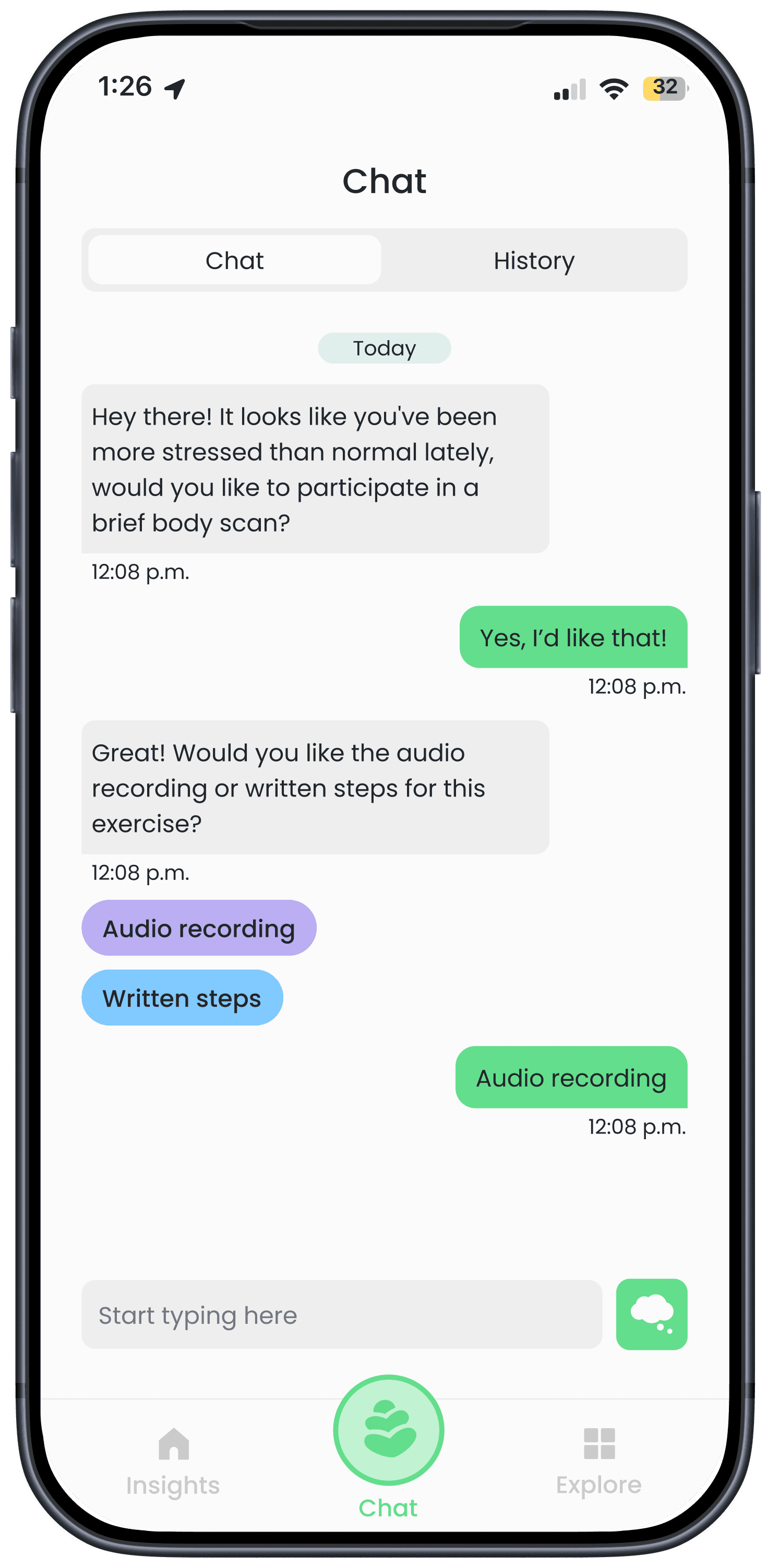
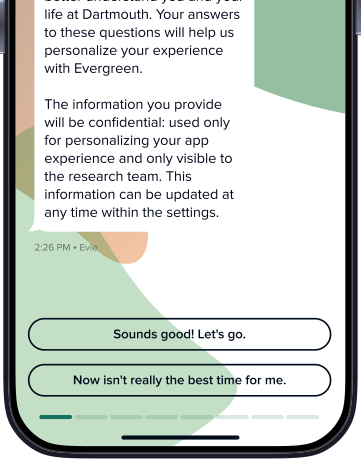
A chat interface felt natural for introducing dialogues in the form of conversations. My team and I created early concepts and simple prototypes for the interface and supporting modules, testing different approaches with students.
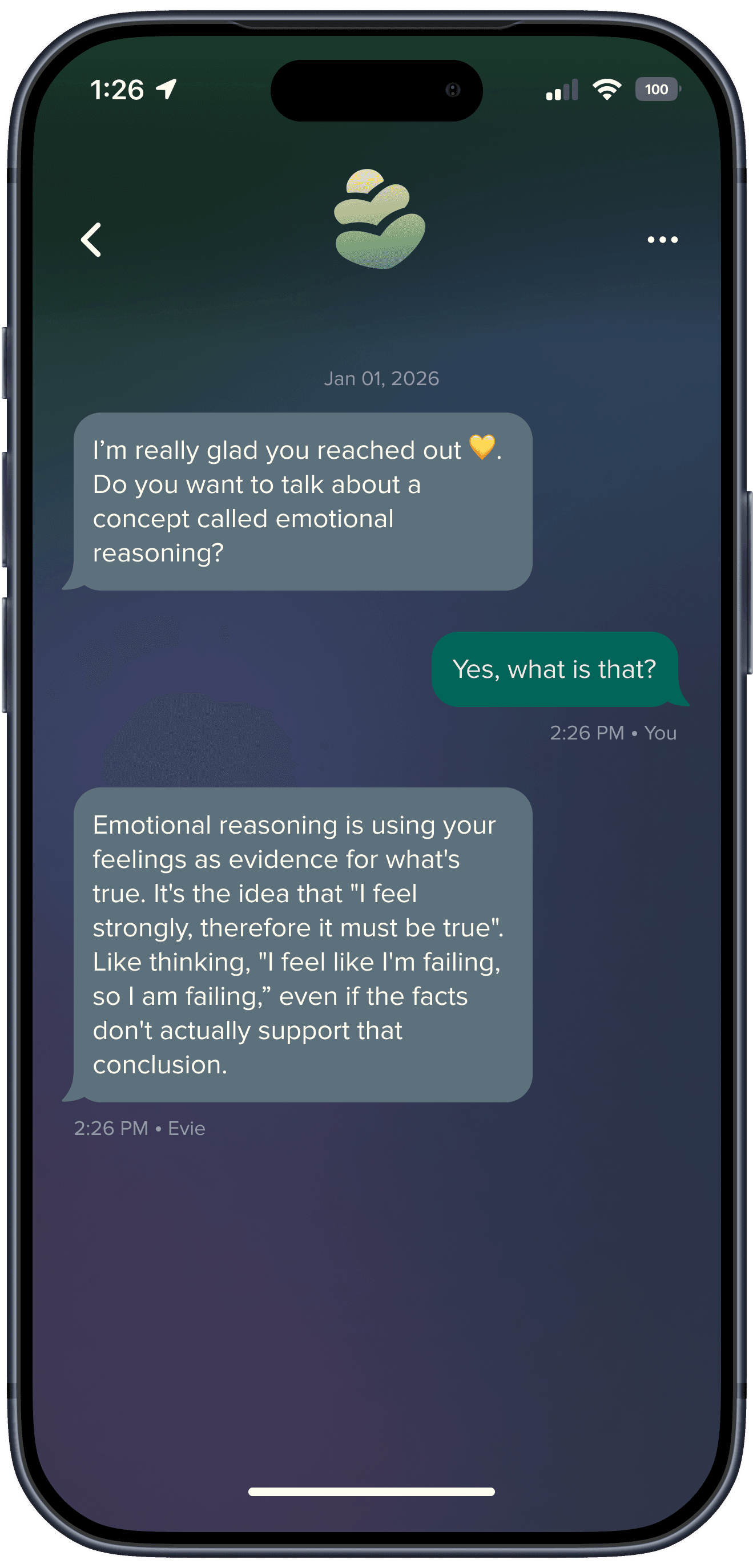
While initial designs established functionality, style and user interactions with responses were inconsistent. I led a redesign of the design system, improving consistency and aligning visual language with Dartmouth’s environmental color palette.

chat experience
Guiding students through conversation flows
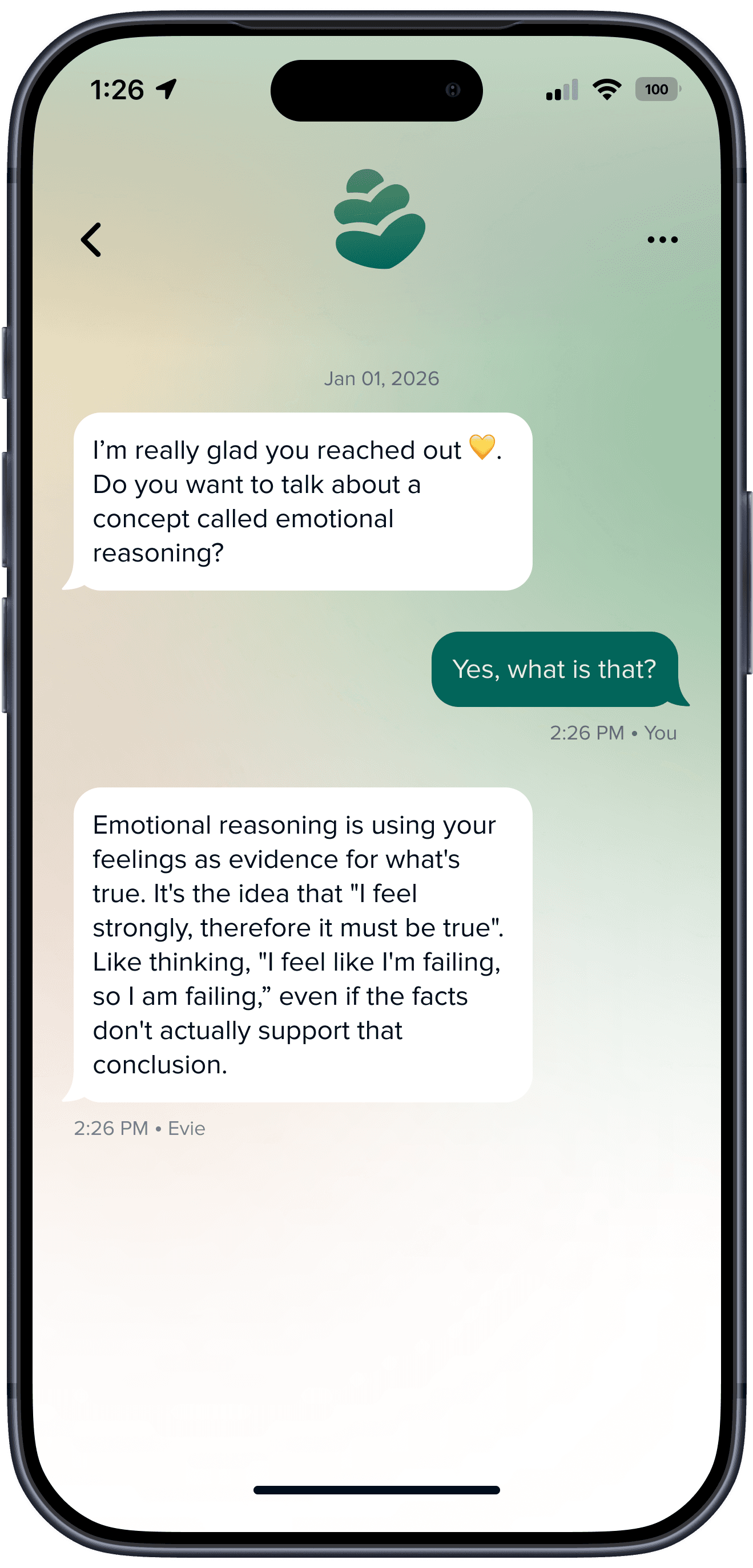
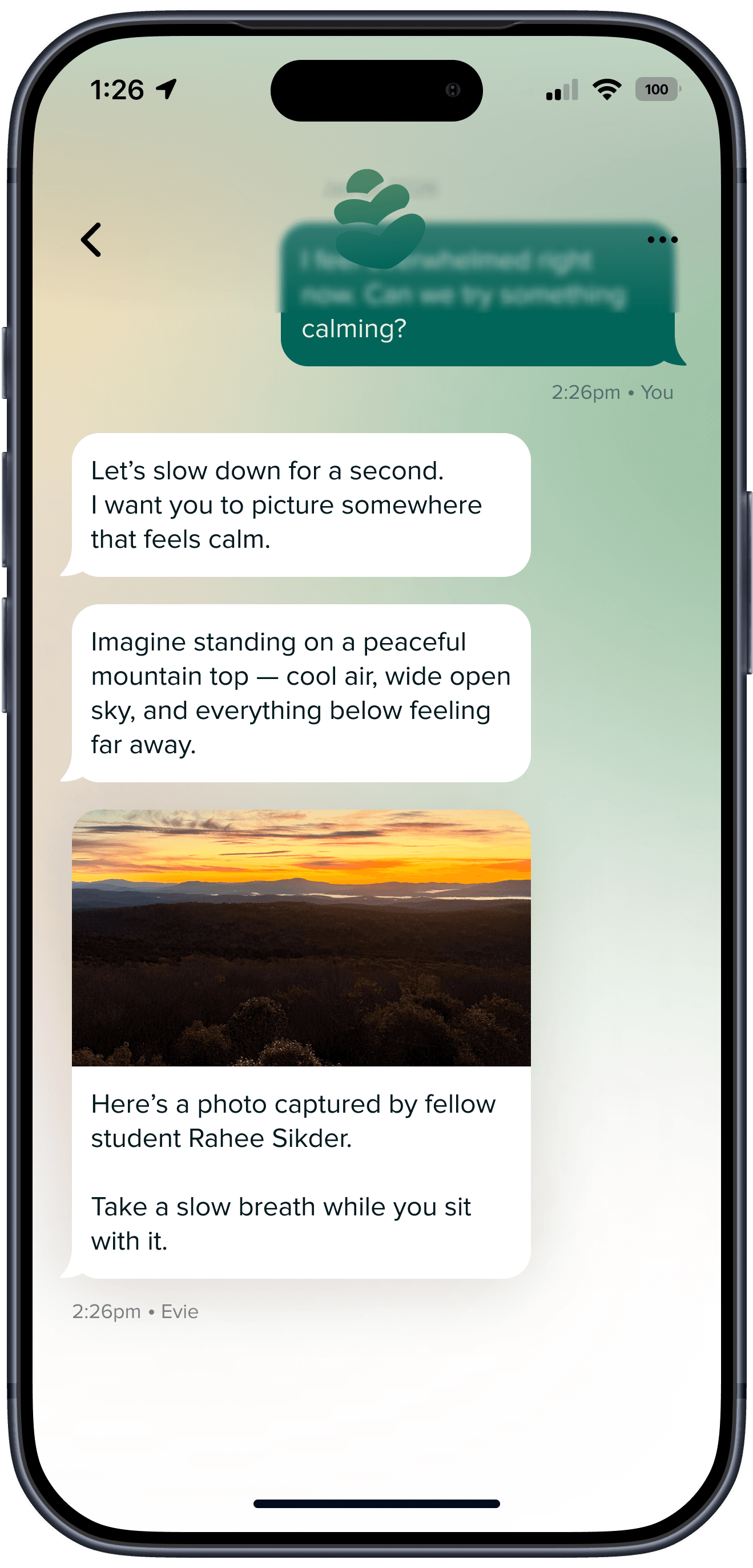
Evie, Evergreen’s conversational assistant, interacts with students through guided dialogues. Designing the chat experience required balancing two goals: maintaining safe, research-backed conversations while enabling natural interactions.
For the app's V1, we discussed with engineering and stakeholders to determine specific data types that would trigger the app's conversational interventions.
While a generative AI conversation would feel more natural, the app will undergo testing within a clinical research trial, where AI unpredictability poses a risk.
For V1, we implemented structured dialogue trees written by Dartmouth student content writers to simulate conversation flows while knowing exactly what users are being exposed to. This trades some naturalness for reliability during early testing.
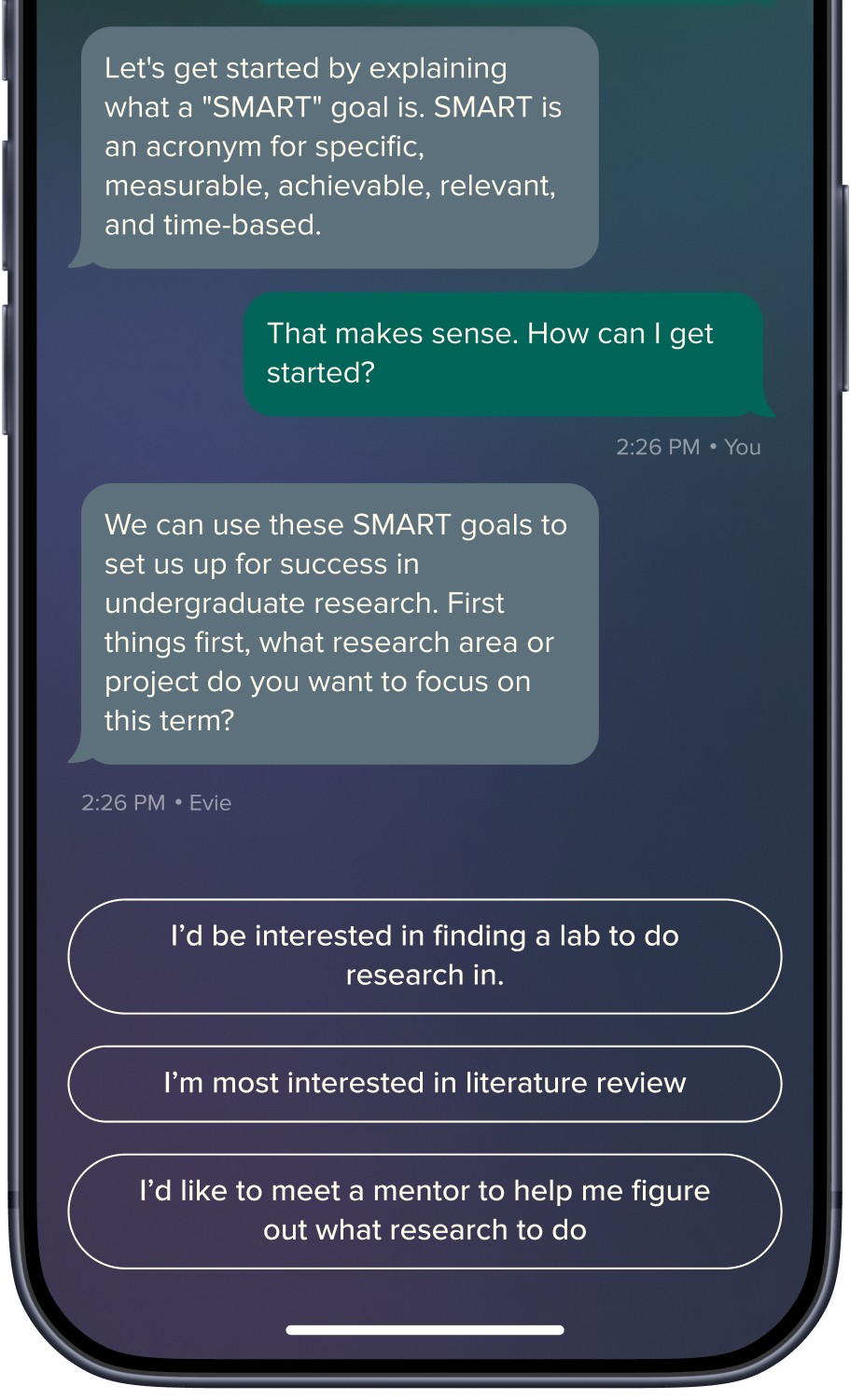
Version 1: Structured dialogue conversation flows
Evergreen’s first release uses a structured dialogue system with selection chips to ensure conversations are reliable and safe to align with early research trials.
How conversations start
Passive sensing signals triggers decision matrix
Student selects a dialogue topic
How responses work
Student selects a response chip option or inputs an occasional free response to continue conversation flow
Why this approach
Safely testable version for initial user testing in a fall 2026 research trial
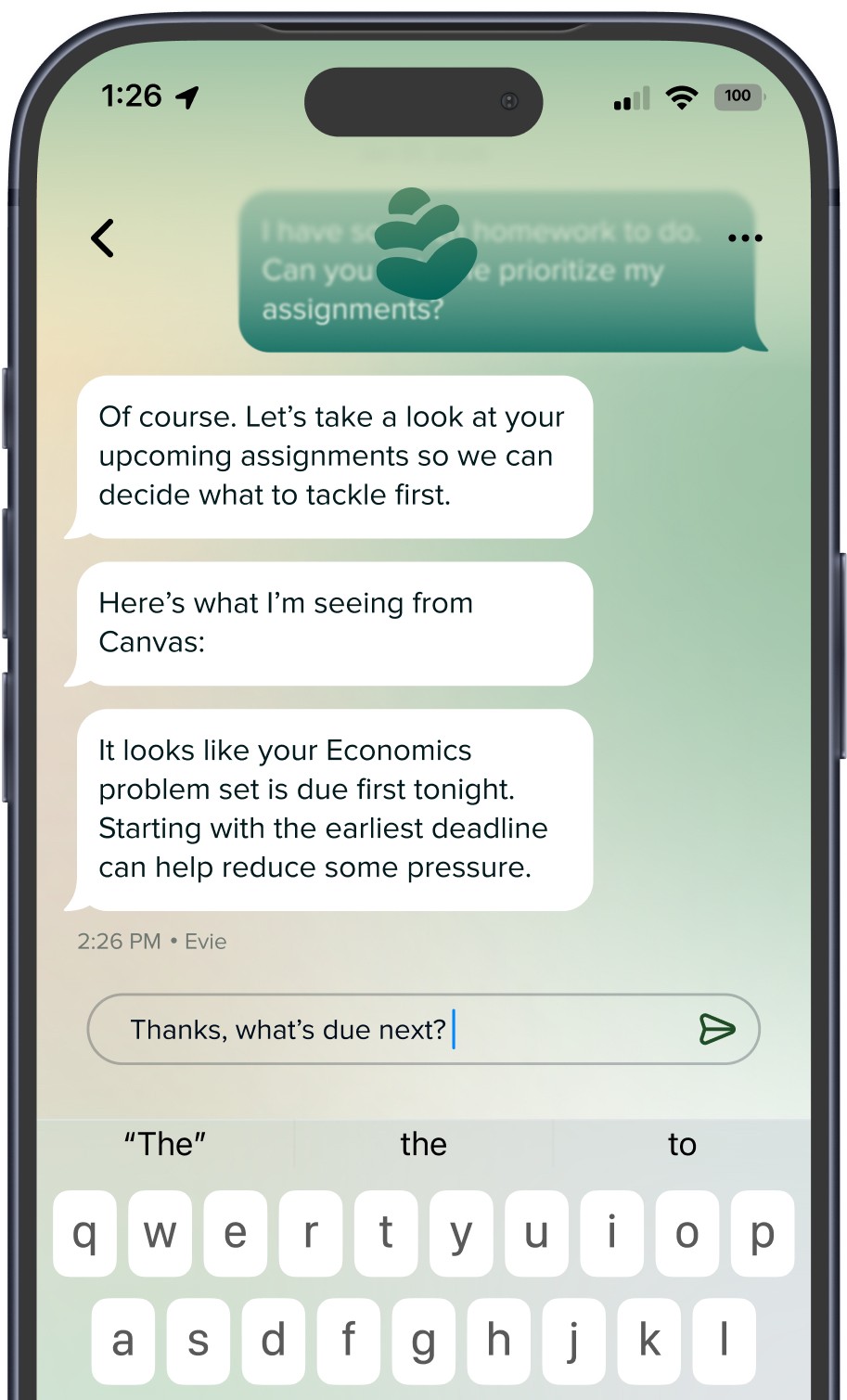
Version 2: Generative, context-aware conversations
As the engineering team fine-tunes a generative LLM, future versions will have generative capabilities, where Evie can respond more flexibly and contextually to student messages.
How conversations start
Passive sensing signals triggers decision matrix
Student initiates a free text message
Student selects a dialogue topic
How responses work
Generative real-time responses based on context and user data. The student replies freely with their own input.
Why this approach
More natural conversations, more possibilities, and greater flexibility for students
Imagining the AI experience, using AI design tools
I'm currently using AI tools like Figma Make and Claude Code to experiment with interaction design and prototyping for the chat experience. One example is the response chip undo option, where users can go revert to one previous step in the conversation tree in order to select a different option.
While AI output gets some details and formatting wrong, it's actively helping my team and I speed up the prototyping process and communicate ideas to our engineering teams more clearly and quickly.
explore page
An entry point to start meaningful conversations
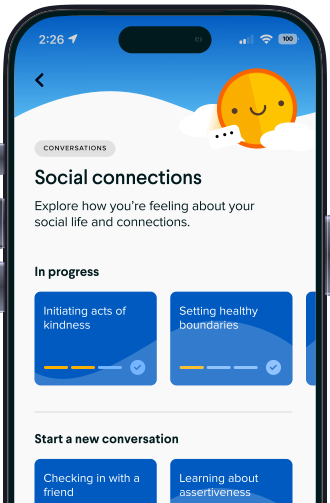
The Explore page acts as a library and discovery point, and allows students to browse and start guided conversations on a variety of topics like study habits, social connections, and digital wellness.
Evergreen began incorporating 100+ student writers to create dialogue content, which expanded the scope of this feature exponentially. As both the structure and visual design required restructuring, I redesigned the page and information hierarchy to support a fast growing conversation library, and introduce more expressive visual language with category-specific characters and card designs.
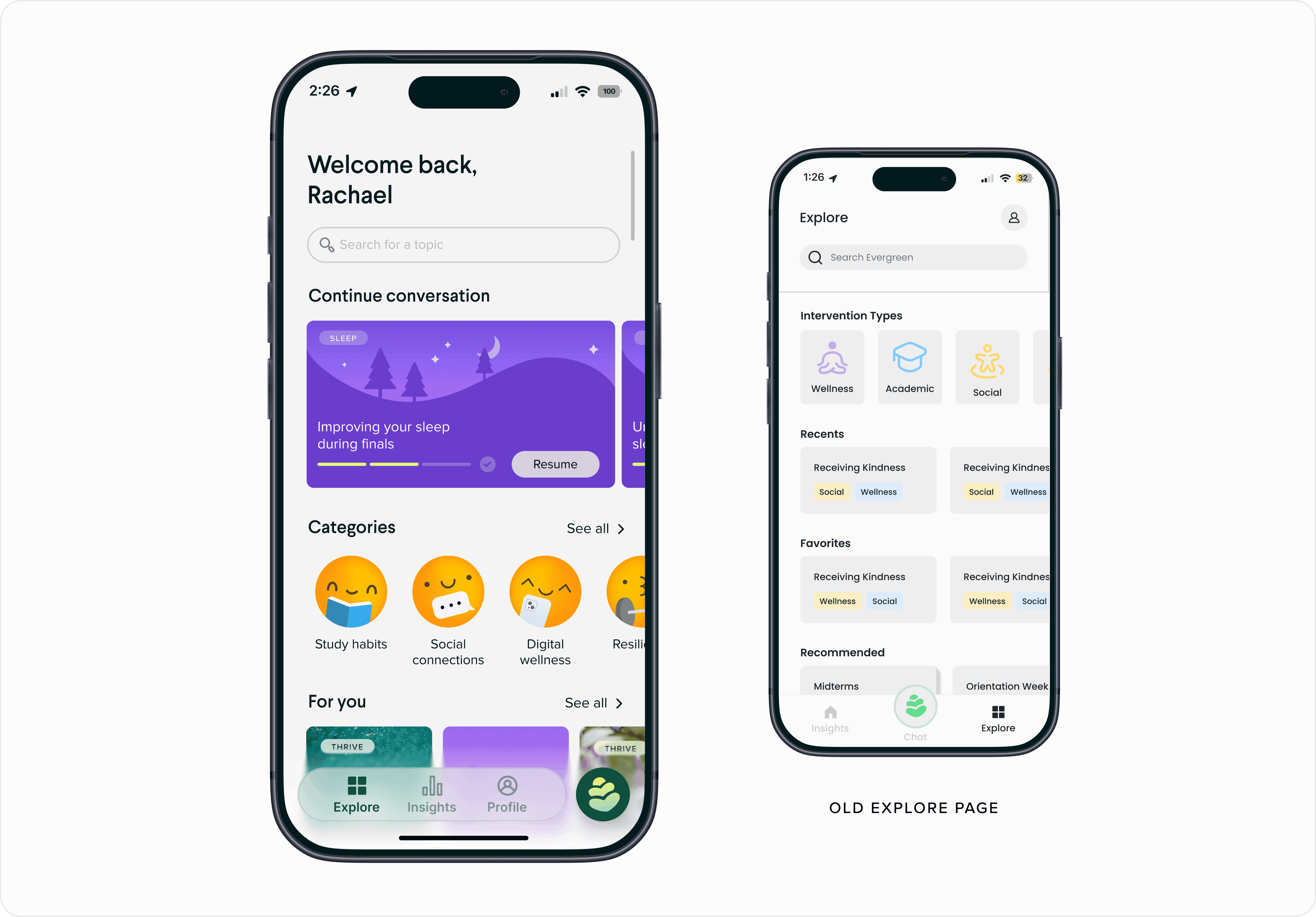
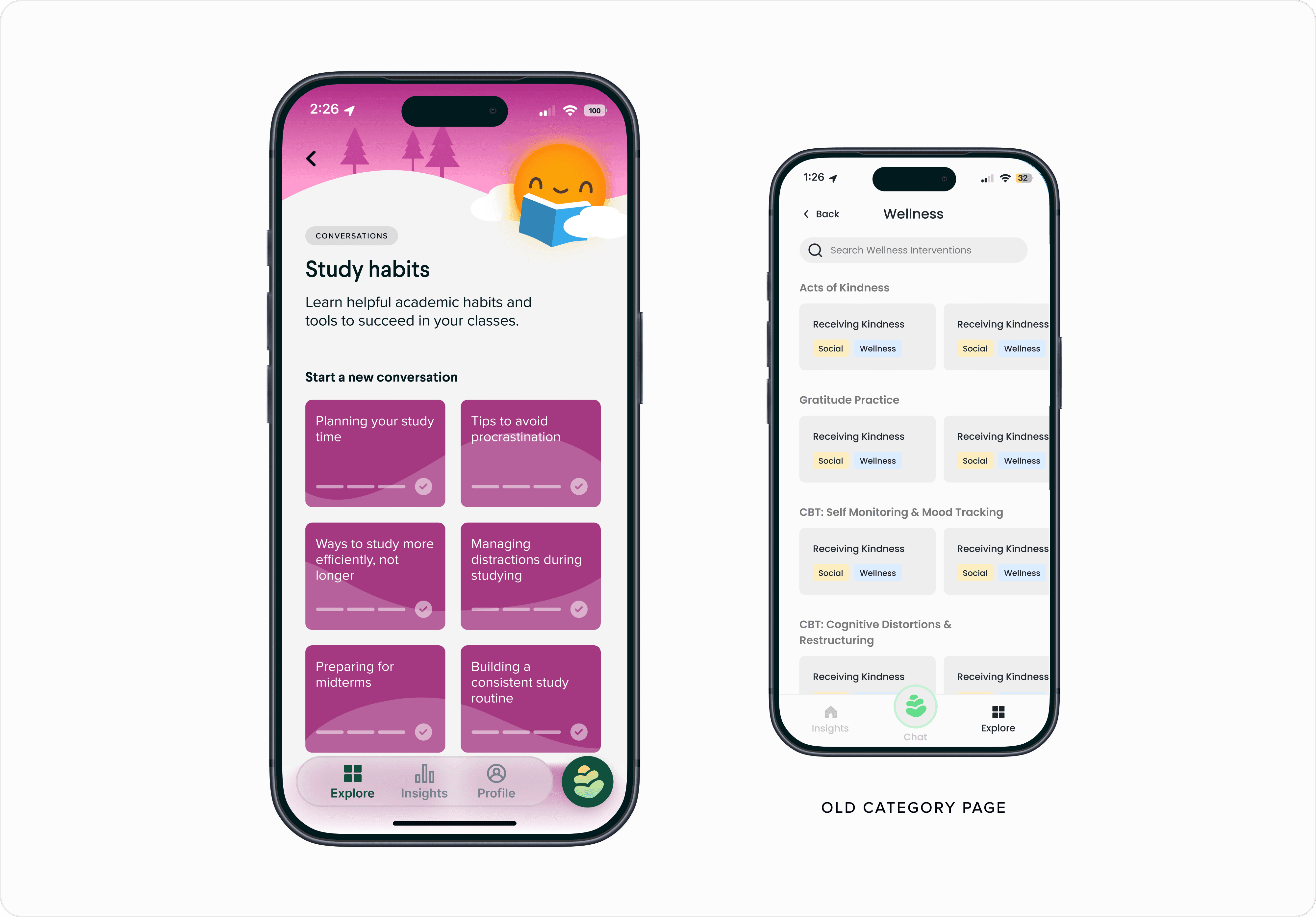
The dialogue team so far has produced 220+ peer-reviewed conversations, spanning across multiple wellbeing topics.
insights page
Helping students reflect on patterns
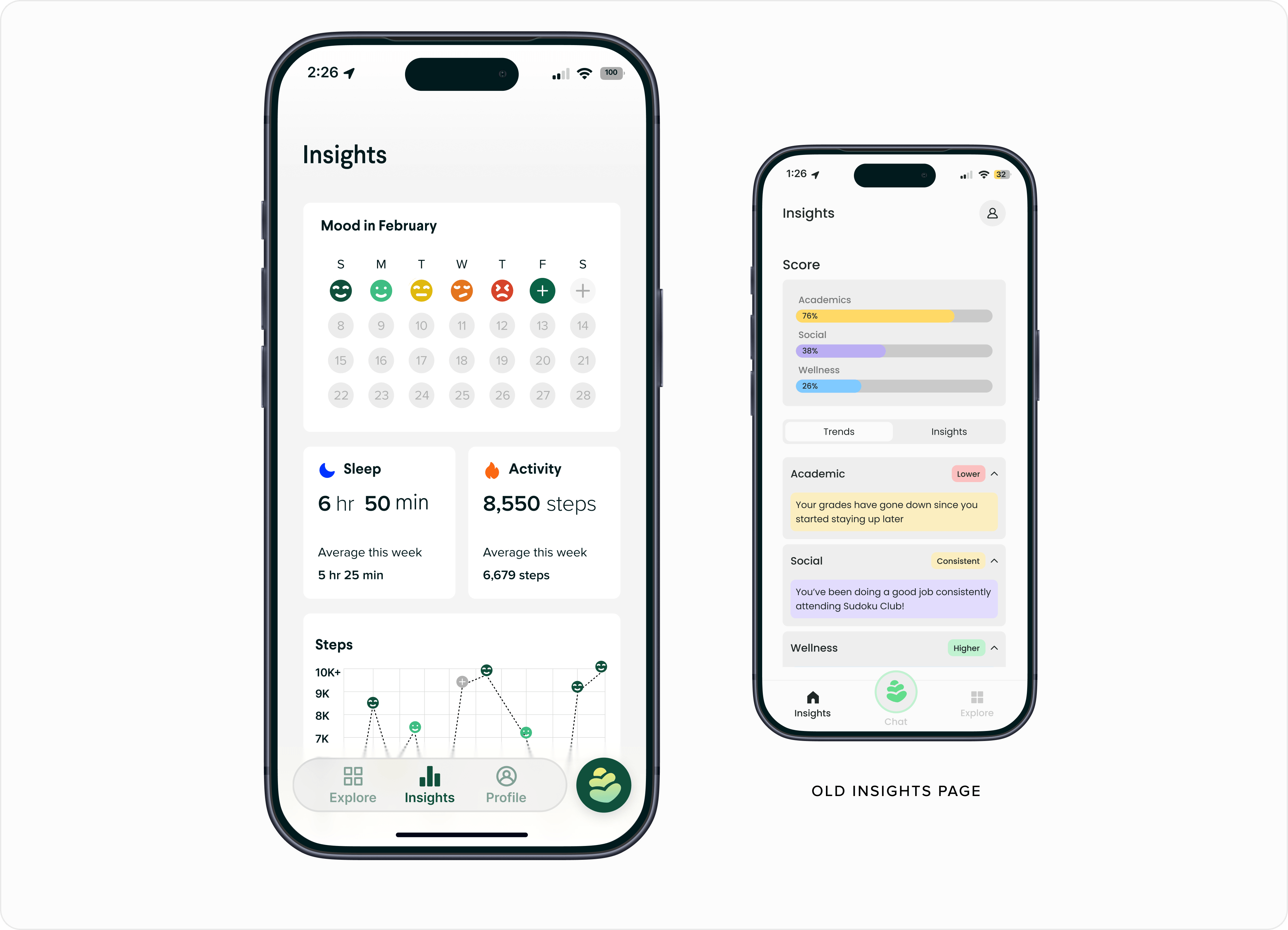
The Insights page visualizes passive sensing and self-reported data, helping students understand patterns over time. Guided by user research showing that students prefer patterns over raw data, we moved beyond simple wellness scores to data visualizations that support the specific data types being collected.
I'm currently collaborating with one of my co-designers to explore ways to visualize mood, integrate passive sensing data, and show correlations of different metrics through time-based graphs.
Reflections
What I’ve learned so far
Systems thinking is critical
This is the largest project ecosystem I’ve worked in yet. Collaborating with content and data teams to know what and how information is accessed helped clarify the system and kept our designs realistic
Constraints are part of the process
We’re balancing research trial limitations and changing product directions, while advocating for the needs of a real student population. It adds complexity, but makes our work grounded.
Your first idea isn’t your best
We went through dozens of iterations over months, from design system elements and colors to chat UX and page layouts, refining every detail more and more along the way
Push for the work you believe in
I learned to really advocate for the features I believed in, and how to best justify my decisions to stakeholders and a non-design audience
Looking ahead
Continuing towards a V1 launch
We’re continuing to refine core features as we move toward an initial limited release in Spring 2026. I’m so grateful to be building alongside an incredible, supportive team!
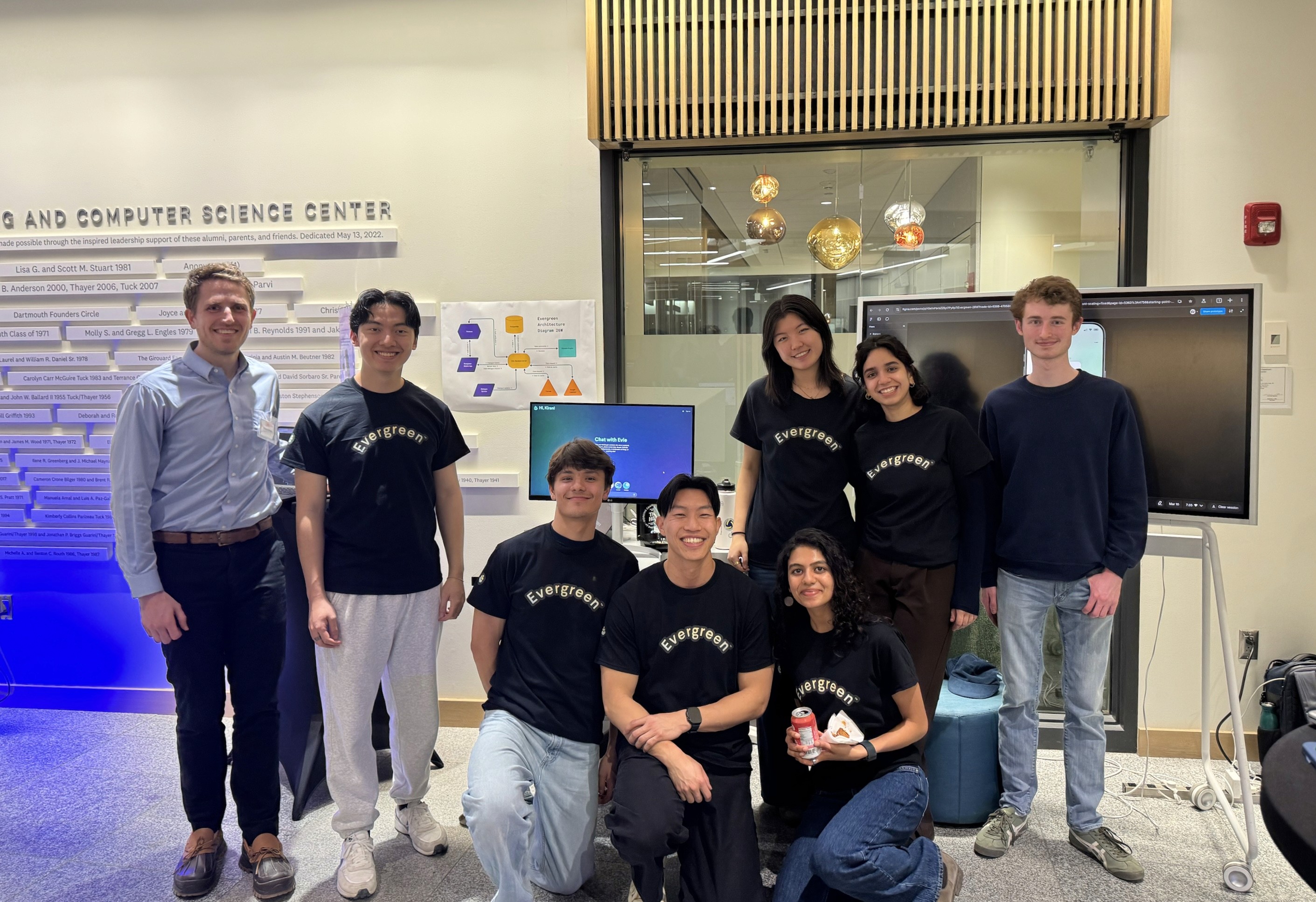
Most of the DALI design + development team (+ Michael, one of our partners) at Technigala, Dartmouth’s quarterly tech showcase, March 2026
Want to learn more about this project? I’m happy to chat!
Reach out to me at rachael.huang.27@dartmouth.edu
in progress designs